The Marketing Metric That Matters More Than ROAS, CTR, and CPM Combined
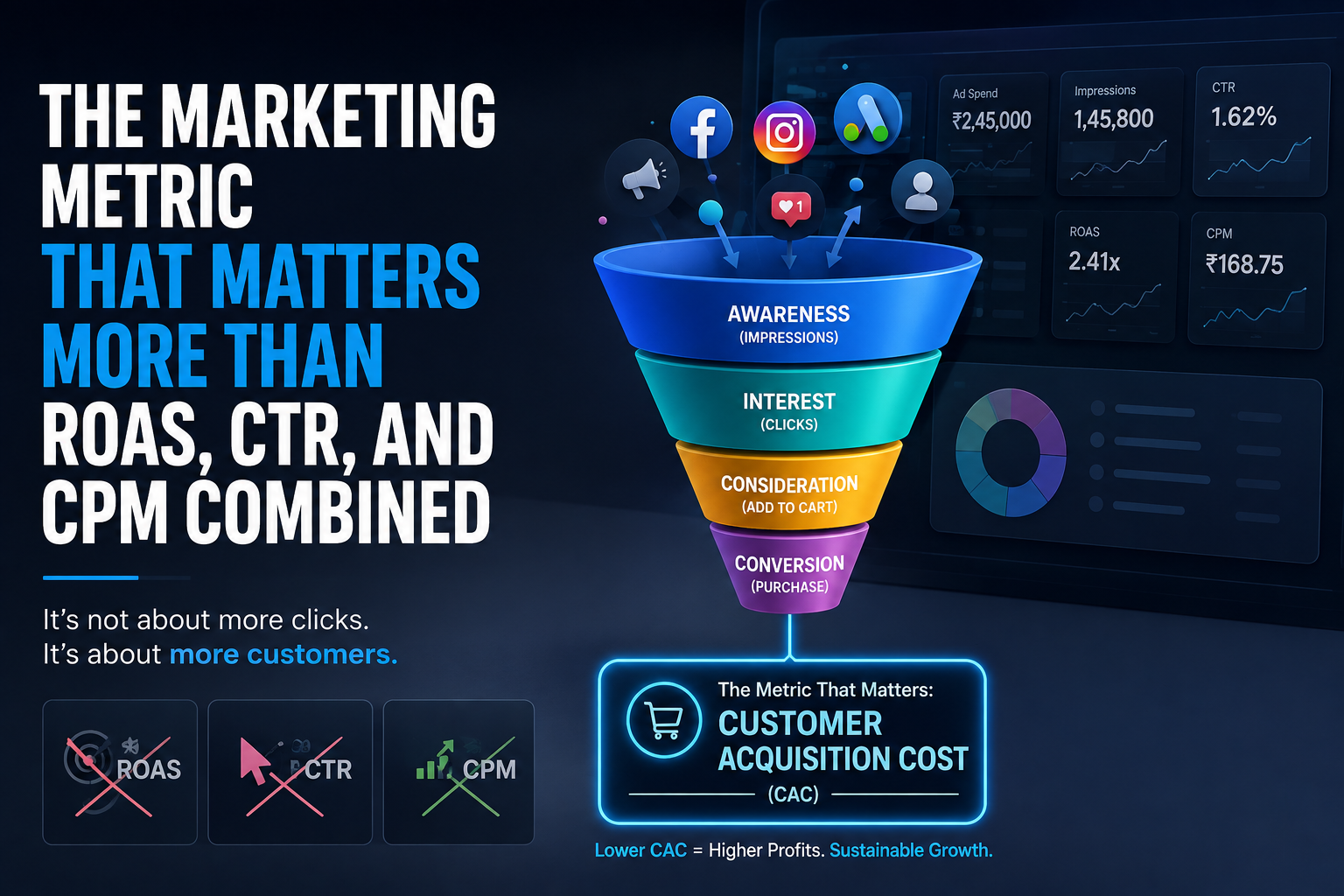
If you asked 100 D2C founders in India to tell you their ROAS right now, 90 of them could answer within seconds.
If you asked those same 100 founders what percentage of their first-time buyers purchased again within 90 days, most of them would go quiet.
That silence is expensive.
The Day 90 Retention Rate, the percentage of new customers who return for a second purchase within 90 days of their first, is the most honest indicator of D2C brand health available. It is more predictive of long-term profitability than return on ad spend. It is more meaningful than click-through rate. It tells you something that no acquisition metric ever can: whether your brand is actually worth coming back to.
This piece breaks down what the metric means, why the 90-day window is specifically significant, what healthy numbers look like across the D2C category, and how the brands with the highest retention rates are engineering those numbers systematically.
Why Acquisition Metrics Are Lying to You
ROAS, CTR, and CPM are acquisition metrics. They measure how efficiently you are bringing new people into the funnel. They are important. They are also dangerously incomplete as measures of business health.
Here is the math that exposes the gap.
A D2C brand with a Rs 600 CAC and a Rs 900 average order value is generating Rs 270 in gross margin on a first purchase, assuming a 30 percent margin after logistics and cost of goods. Against a Rs 600 acquisition cost, that brand is Rs 330 in the negative on every single new customer they bring in.
A 4x ROAS looks excellent on a dashboard. The underlying unit economics are negative until the second purchase.
This is the foundational reality of D2C economics that most founders understand intellectually but do not operationally solve for. The first sale recovers the ad spend. The second sale is where the business actually begins.
ROAS optimisation without retention optimisation is an exercise in running faster on an increasingly expensive treadmill.
What the Day 90 Retention Rate Actually Measures
The Day 90 Retention Rate answers one specific question: of all the customers who made their first purchase in a given month, how many of them purchased again before 90 days had passed?
The 90-day window is not arbitrary. It reflects the natural decay curve of purchase intent for most D2C categories.
Research consistently shows that a customer's probability of reordering is highest in the 30 to 45 days following delivery of their first order. The product is new, the experience is fresh, and if the product delivered on its promise, the desire to reorder or explore other products is at its peak.
By day 60, that probability has dropped significantly. By day 90, a customer who has not repurchased and has not been meaningfully engaged has typically moved on. They have either found an alternative, settled into a different habit, or simply stopped thinking about your brand.
The 90-day window is the window that matters. What happens inside it determines whether a customer becomes a repeat buyer or a very expensive one-time transaction.
What Healthy Numbers Look Like
Based on patterns we observe working with D2C brands across categories, here is how Day 90 Retention Rates generally break down.
Below 15 percent
Represents a broken retention model. Almost every rupee of growth is being funded by acquisition spend. The business has no compounding effect and is entirely dependent on a constant flow of new strangers discovering the brand through paid channels.
Between 15 and 25 percent
Average for most Indian D2C brands. Survivable, but not compounding. The brand is growing but the economics are tight because the acquisition cost is only being partially offset by return purchases.
Between 25 and 40 percent
Strong. Brands in this range have a meaningful percentage of their revenue coming from customers who cost nothing to reacquire. Margin improves, growth becomes less dependent on ad spend, and the brand starts building genuine equity.
Above 40 percent
Category leading. Brands at this level have built something genuinely sticky. Customer lifetime value is high enough that they can afford to be more aggressive on acquisition because they know a significant percentage of new buyers will return multiple times.
The honest reality is that most Indian D2C brands sit between 12 and 18 percent. And most of them are not tracking the number at all, which means they have no visibility into one of the most important levers available to them.
Why Most Brands Are Not Solving This
The gap between where most brands sit and where they could be is almost never a product problem.
The product that earned the first purchase is usually good enough to earn the second. The barrier is not quality. It is communication.
A customer who bought from you 30 days ago has not forgotten that they liked your product. They have simply been buried under 400 other notifications, decisions, and distractions since then. They need a prompt. A personalised, well-timed prompt that makes it easy to buy again.
Most brands are sending that prompt via email.
Email post-purchase open rates in Indian e-commerce average between 18 and 22 percent. That means for every 100 customers who receive a post-purchase email sequence, approximately 78 of them are not reading a single message in it.
The retention strategy is running. The audience is not seeing it.
The Channel That Actually Reaches the Customer
WhatsApp post-purchase message open rates sit between 92 and 97 percent across the brands we have tracked at Waapper.
The same message, sent to the same customer, on a different channel produces a fundamentally different outcome. Not because the content is better. Because the channel is one the customer has already decided to pay attention to.
A structured three-stage post-purchase WhatsApp sequence looks like this in practice.
The first message goes out 24 to 48 hours after delivery. It is not a pitch. It is a genuine check-in. Did the product arrive in good condition? Is there anything they need? This message builds trust and opens a two-way conversation.
The second message goes out between day 21 and day 28. It references the specific product they purchased, acknowledges that it has been a few weeks, and offers something worth coming back for. Early access, a small discount on a complementary product, or a personalised recommendation based on their first order.
The third message, if no second purchase has happened, goes out around day 45. A re-engagement prompt. Warm in tone. Specific in reference. Easy to act on.
Three messages. Automated. Triggered by purchase behaviour without any manual intervention. The cost per customer to run this sequence is a fraction of a rupee per message.
What Happens When Brands Switch
Across the brands we work with at Waapper, the shift from email-only post-purchase communication to WhatsApp automation produces a consistent pattern.
Brands that had Day 90 Retention Rates of 13 to 16 percent have moved to 29 to 34 percent within 60 days of implementing a WhatsApp post-purchase sequence.
Same product. Same price point. Same advertising. Different communication infrastructure.
The compounding effect of that improvement is significant. A brand doing 500 orders per month that moves from 15 percent to 30 percent Day 90 Retention is generating 75 additional orders per month from customers it has already acquired. At an average order value of Rs 2,400, that is Rs 1.8 lakh per month in incremental revenue with zero additional acquisition spend.
The Number to Pull Before You Do Anything Else
Before increasing the Meta budget, before testing a new creative, before hiring another performance marketer, pull one number from your analytics.
What percentage of customers who made their first purchase three months ago have purchased again?
If you do not know the answer, that is the most important problem to solve today.
If you know the answer and it is below 20 percent, your retention infrastructure needs to come before your next acquisition campaign.
Waapper builds automated WhatsApp post-purchase sequences that convert first-time buyers into repeat customers within 90 days. The setup is straightforward, the automation runs without manual management, and the impact on Day 90 Retention Rates is measurable within the first 60 days.
The second purchase is where your margin begins. Build the system that earns it.
Visit waapper.com to get started.